

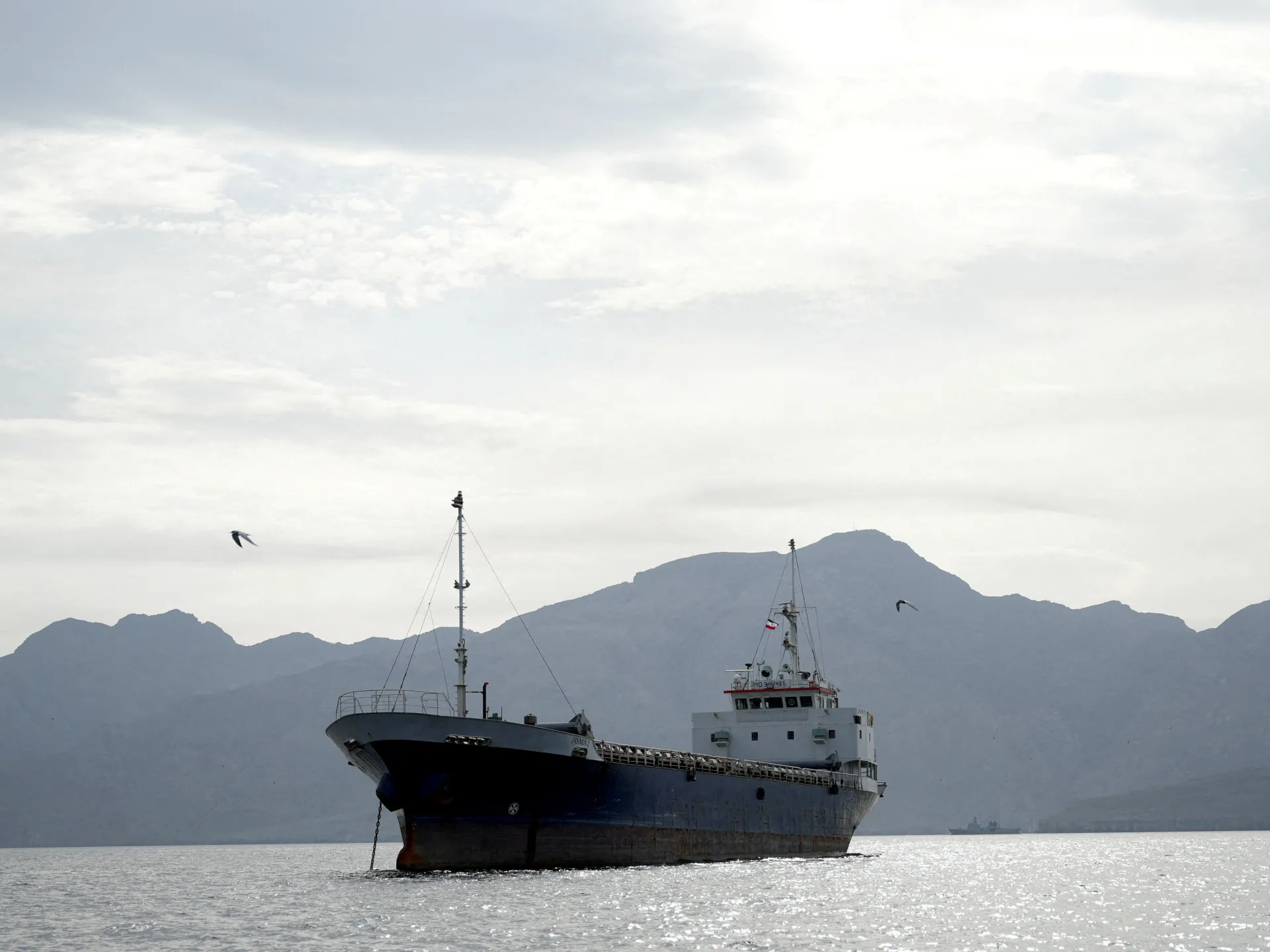
In less than 24 hours after the U.S. Central Command (Centcom) announced a naval embargo on Iranian ports, several ships still transited the Strait of Hormuz unimpeded, raising doubts about the blockade’s effectiveness. According to a military analysis by Colonel Hasan Juni, the early‑hours actions revealed a “gap between the declared decision and its real‑world implementation.” While the U.S. Navy deployed a layered response—surveillance, approach, stop orders, and, if needed, boarding and seizure—its assets (aircraft carrier USS Abraham Lincoln, destroyers, support ships, helicopters and missiles) operated up to 200 km from the eastern Hormuz entrance, within range of Iranian anti‑ship missiles. Nevertheless, commercial traffic continued in both directions with no significant interceptions. Juni noted divergent legal interpretations of the United Nations Convention on the Law of the Sea: international law guarantees “transit passage” through straits, while Iran invokes a “innocent passage” concept, complicating enforcement. He speculated that undisclosed arrangements may be preventing direct confrontation, explaining the limited engagements despite the formal embargo.
المصدر
هل عجزت الولايات المتحدة عن إغلاق موانئ إيران في الساعات الأولى من الحصار؟ | أخبار


مقالات ذات صلة